
BREED INFO
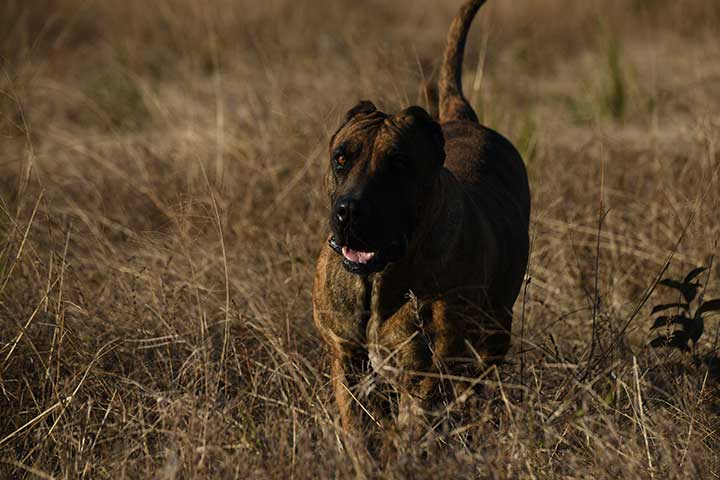
The Presa Canario, also formerly known as the Perro de Presa Canario or the “Canary Dog of Prey,” is a powerful and historic Molosser breed with origins dating back to the fifteenth and sixteenth centuries. Numerous historians have documented the development of this impressive guardian dog, which was bred for its strength, courage, and tenacity.
Origins of the Presa Canario
After the Spanish conquest of the Canary Islands, large dogs were introduced to the islands. Some types of dogs were either already present on the islands or later brought in by Spanish Conquistadors. Many of the Canarian dogs we know today were developed for essential tasks such as guarding farms, protecting livestock, hunting small game, and managing feral dogs. Several of these foundational Canarian breeds are believed to have influenced the foundation of the Presa Canario.
BREED INFO
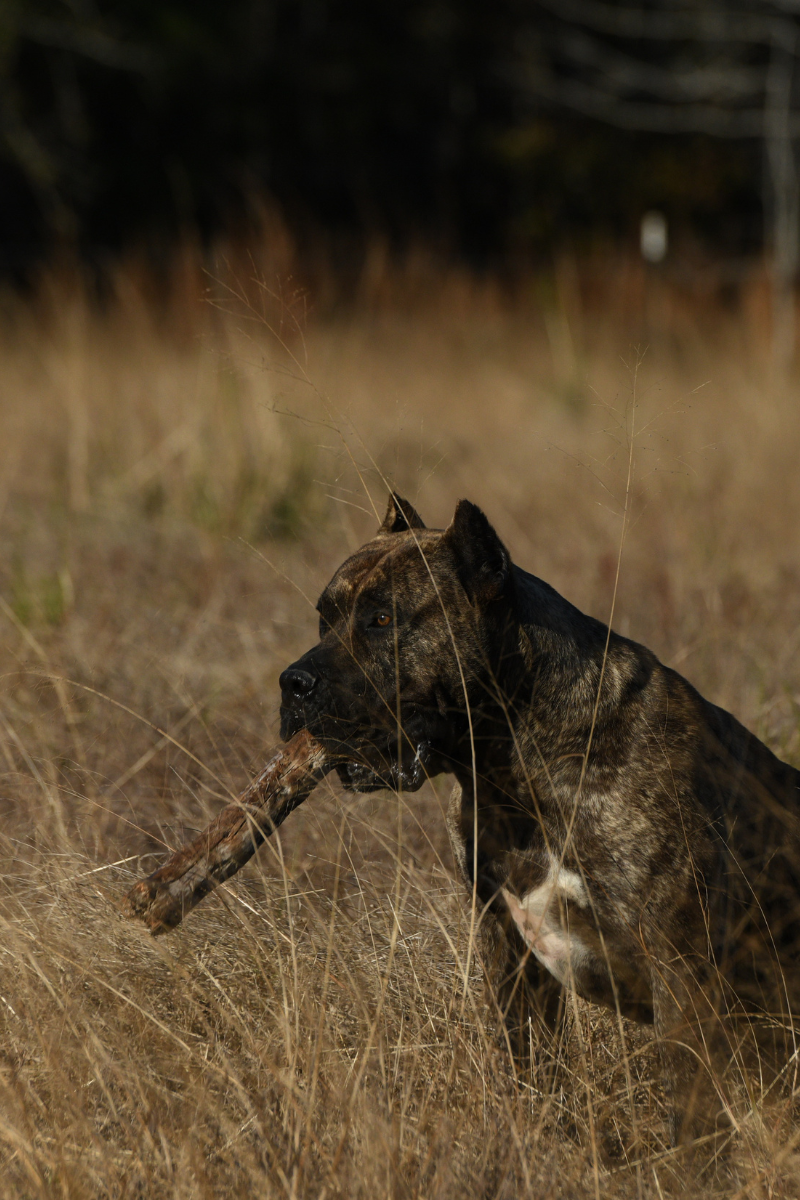
The Presa Canario, also formerly known as the Perro de Presa Canario or the “Canary Dog of Prey,” is a powerful and historic Molosser breed with origins dating back to the fifteenth and sixteenth centuries. Numerous historians have documented the development of this impressive guardian dog, which was bred for its strength, courage, and tenacity.
Origins of the Presa Canario
After the Spanish conquest of the Canary Islands, large dogs were introduced to the islands. Some types of dogs were either already present on the islands or later brought in by Spanish Conquistadors. Many of the Canarian dogs we know today were developed for essential tasks such as guarding farms, protecting livestock, hunting small game, and managing feral dogs. Several of these foundational Canarian breeds are believed to have influenced the foundation of the Presa Canario.
The Bardino Majorero Influence
One of the most significant genetic influences on the Presa Canario was the Bardino Majorero, a pre-Hispanic livestock and farm dog native to Fuerteventura. Known for its strong guardian instincts, resistance, intelligence, calm confidence, and ability to work long hours in harsh conditions, the Bardino Majorero contributed heavily to the Presa’s development. Its steady, incorruptible temperament, minimal barking, and natural suspicion of strangers helped shape many of the traits we continue to recognize in the modern Presa Canario.
The Decline of the Presa Canario
By the 1940s, the Presa Canario population had already begun to decline. Dog fighting (which had been a major factor in maintaining the breed through the late 1800s and early 1900s) was prohibited in the Canary Islands, reducing one of the main reasons people intentionally bred Presa. Although clandestine fights lingered into the 1950s, the overall demand for the breed dropped significantly.
At the same time, the economic strain caused by the Spanish Civil War (1936–1939) and the hardship that followed during World War II made it increasingly difficult for Canarians to keep large working dogs. Feeding a large dog required resources many families no longer had. People prioritized livestock, food production, and basic survival. Dogs that did not directly contribute to day-to-day work were often culled, sold, or simply not replaced when they died. Even farmers and herdsmen struggled, keeping only the most essential, reliable working animals.
The situation further worsened with the introduction and rising popularity of foreign breeds such as the German Shepherd, Doberman Pinscher, and Great Dane, which were promoted as modern, trainable working dogs. These imported breeds captured the interest of local dog owners, pushing the Presa Canario further toward extinction. By the mid-20th century, only a scattered handful of dogs survived in rural areas, maintained by farmers who still relied on them as traditional guardians of property and livestock.
The Bardino Majorero Influence
One of the most significant genetic influences on the Presa Canario was the Bardino Majorero, a pre-Hispanic livestock and farm dog native to Fuerteventura. Known for its strong guardian instincts, resistance, intelligence, calm confidence, and ability to work long hours in harsh conditions, the Bardino Majorero contributed heavily to the Presa’s development. Its steady, incorruptible temperament, minimal barking, and natural suspicion of strangers helped shape many of the traits we continue to recognize in the modern Presa Canario.
The Decline of the Presa Canario
By the 1940s, the Presa Canario population had already begun to decline. Dog fighting (which had been a major factor in maintaining the breed through the late 1800s and early 1900s) was prohibited in the Canary Islands, reducing one of the main reasons people intentionally bred Presa. Although clandestine fights lingered into the 1950s, the overall demand for the breed dropped significantly.
At the same time, the economic strain caused by the Spanish Civil War (1936–1939) and the hardship that followed during World War II made it increasingly difficult for Canarians to keep large working dogs. Feeding a large dog required resources many families no longer had. People prioritized livestock, food production, and basic survival. Dogs that did not directly contribute to day-to-day work were often culled, sold, or simply not replaced when they died. Even farmers and herdsmen struggled, keeping only the most essential, reliable working animals.
The situation further worsened with the introduction and rising popularity of foreign breeds such as the German Shepherd, Doberman Pinscher, and Great Dane, which were promoted as modern, trainable working dogs. These imported breeds captured the interest of local dog owners, pushing the Presa Canario further toward extinction. By the mid-20th century, only a scattered handful of dogs survived in rural areas, maintained by farmers who still relied on them as traditional guardians of property and livestock.
The Bardino Majorero Influence
The Bardino Majorero Influence
One of the most significant genetic influences on the Presa Canario was the Bardino Majorero, a pre-Hispanic livestock and farm dog native to Fuerteventura. Known for its strong guardian instincts, resistance, intelligence, calm confidence, and ability to work long hours in harsh conditions, the Bardino Majorero contributed heavily to the Presa’s development. Its steady, incorruptible temperament, minimal barking, and natural suspicion of strangers helped shape many of the traits we continue to recognize in the modern Presa Canario.
The Decline of the Presa Canario
By the 1940s, the Presa Canario population had already begun to decline. Dog fighting (which had been a major factor in maintaining the breed through the late 1800s and early 1900s) was prohibited in the Canary Islands, reducing one of the main reasons people intentionally bred Presa. Although clandestine fights lingered into the 1950s, the overall demand for the breed dropped significantly.
At the same time, the economic strain caused by the Spanish Civil War (1936–1939) and the hardship that followed during World War II made it increasingly difficult for Canarians to keep large working dogs. Feeding a large dog required resources many families no longer had. People prioritized livestock, food production, and basic survival. Dogs that did not directly contribute to day-to-day work were often culled, sold, or simply not replaced when they died. Even farmers and herdsmen struggled, keeping only the most essential, reliable working animals.
The situation further worsened with the introduction and rising popularity of foreign breeds such as the German Shepherd, Doberman Pinscher, and Great Dane, which were promoted as modern, trainable working dogs. These imported breeds captured the interest of local dog owners, pushing the Presa Canario further toward extinction. By the mid-20th century, only a scattered handful of dogs survived in rural areas, maintained by farmers who still relied on them as traditional guardians of property and livestock.
The Revival of the Presa Canario
Reconstruction of the nearly extinct breed began in the early 1970s, primarily on Tenerife, when a small group of dedicated Canarian breeders set out to locate the last remaining dogs that still carried the traditional traits of the old working Presa. These efforts were grassroots and informal, shaped by the realities of the time—limited resources, scattered surviving dogs, and nearly no written documentation. Breeders worked with what they had, selecting dogs for rustic type, functional structure, stable but strong temperament, and the natural guarding instinct that had always defined the Canary Island farm dogs. Their persistence during this early, challenging period laid the foundation for the breed’s survival.
The revival gained meaningful momentum in 1982, when breeders on Tenerife formed the Club Español del Presa Canario (CEPRC), the first official organization dedicated to the breed’s recovery. Though the early club years were still evolving, they represented the beginning of a unified effort to identify, preserve, and standardize the Presa Canario. Through growing collaboration, clearer selection goals, and increasing interest across the Canary Islands and mainland Spain, the breed gradually regained stability. By the 1990s, the Presa Canario had developed into a more consistent and recognizable working breed, honoring both its heritage and the Canarian breeders whose commitment ensured its continuation.
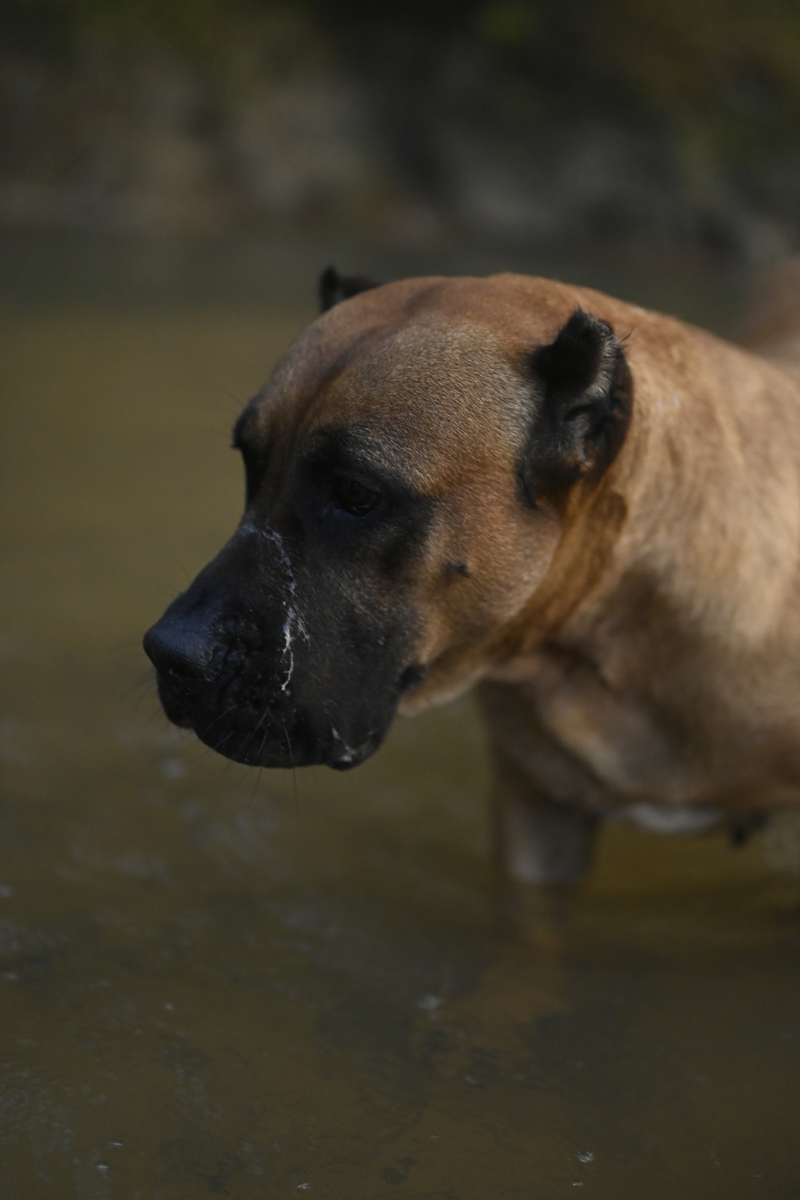
The Revival of the Presa Canario
Reconstruction of the nearly extinct breed began in the early 1970s, primarily on Tenerife, when a small group of dedicated Canarian breeders set out to locate the last remaining dogs that still carried the traditional traits of the old working Presa. These efforts were grassroots and informal, shaped by the realities of the time—limited resources, scattered surviving dogs, and nearly no written documentation. Breeders worked with what they had, selecting dogs for rustic type, functional structure, stable but strong temperament, and the natural guarding instinct that had always defined the Canary Island farm dogs. Their persistence during this early, challenging period laid the foundation for the breed’s survival.
The revival gained meaningful momentum in 1982, when breeders on Tenerife formed the Club Español del Presa Canario (CEPRC), the first official organization dedicated to the breed’s recovery. Though the early club years were still evolving, they represented the beginning of a unified effort to identify, preserve, and standardize the Presa Canario. Through growing collaboration, clearer selection goals, and increasing interest across the Canary Islands and mainland Spain, the breed gradually regained stability. By the 1990s, the Presa Canario had developed into a more consistent and recognizable working breed, honoring both its heritage and the Canarian breeders whose commitment ensured its continuation.
The Modern Presa Canario
Today, the Presa Canario continues to grow in recognition and preservation, supported by modern breed organizations committed to maintaining its historic character and functional type. In the United States, the breed is recorded in the AKC Foundation Stock Service (FSS), a program designed to document and protect developing and heritage breeds. The official AKC Parent Club for the Presa Canario is the Presa Canario Club of America (PCCA; the only U.S. club recognized as an affiliate of the Real Sociedad Canina de España (RSCE), the Spanish kennel club and steward of the original breed standard. Richard serves on the PCCA Board of Directors, contributing to the continued education, preservation, and responsible promotion of the breed. With these organizations working in partnership with breeders and owners worldwide, the Presa Canario maintains a clear path forward. A path rooted in its Canary Island heritage and guided by the standard that defines the breed today.

The Modern Presa Canario
Today, the Presa Canario continues to grow in recognition and preservation, supported by modern breed organizations committed to maintaining its historic character and functional type. In the United States, the breed is recorded in the AKC Foundation Stock Service (FSS), a program designed to document and protect developing and heritage breeds. The official AKC Parent Club for the Presa Canario is the Presa Canario Club of America (PCCA; the only U.S. club recognized as an affiliate of the Real Sociedad Canina de España (RSCE), the Spanish kennel club and steward of the original breed standard. Richard serves on the PCCA Board of Directors, contributing to the continued education, preservation, and responsible promotion of the breed. With these organizations working in partnership with breeders and owners worldwide, the Presa Canario maintains a clear path forward. A path rooted in its Canary Island heritage and guided by the standard that defines the breed today.
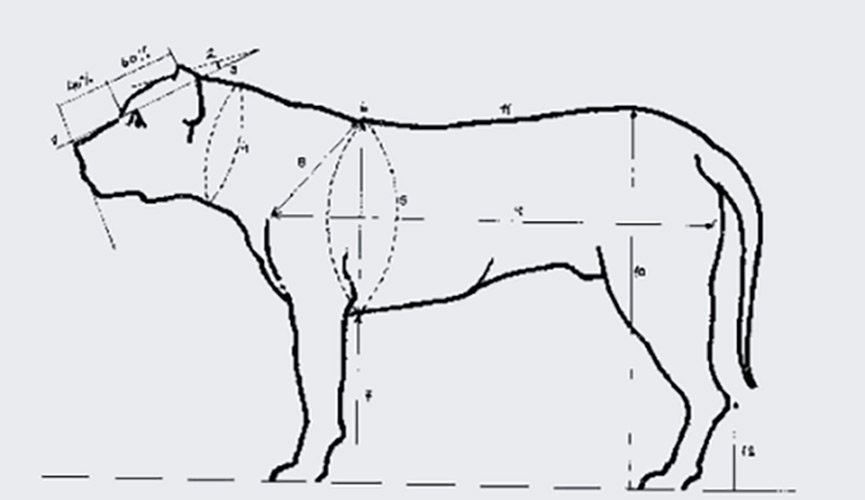
Presa Canario Conformation Proportion Diagram

WHAT SHOULD A
PRESA LOOK LIKE?
As per FCI Breed Standard
WHAT SHOULD A
PRESA LOOK LIKE?
As per FCI Breed Standard